Tuesday, May 21, 2013

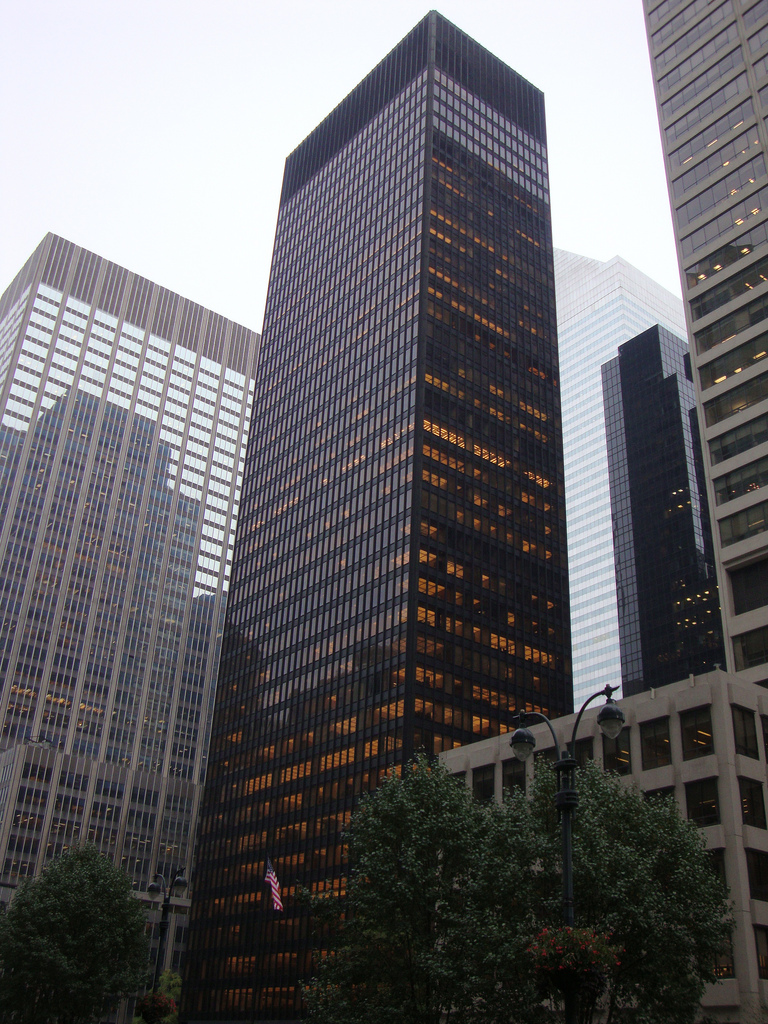
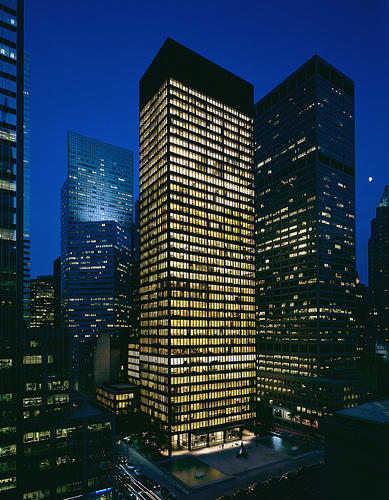
The Gloves are Off (Seagram Building Pt. 2)


Reuters drops some nuggets of gold in this article but for the sake of brevity, and my 9am deadline, I'm going to paste the relevant pieces.  This is in regards to last week's post on CGCMT 2013-375P.

The Pricing
  1. While this type of rating agency sniping has been going on over the past two years...it has never been timed in this way, according to industry participants.
  2. "The underwriters clearly emptied the old bag of tricks on this one, as far as crisis-era underwriting goes, and the agencies [fell for] them," said the head of CMBS investing at one of the biggest asset managers in the country.
    1.  Those tricks included re-measuring the building, lowering management fees in order to minimize projected expenses, and creating an 'optimizing' structure that pushes as much away from the mezzanine debt into the securitization at the Triple B minus level.
  3. ...the Triple A portion of the US$572.9m transaction was increased at pricing on Thursday from US$75m to US$209m. Spreads on the most subordinate pieces widened considerably, however. The deal was originally US$439.75m. 


The Structure
  1. The underwriters securitized the entirety of the so-called subordinate, or junior, portion of a US$782.75m commercial mortgage on the Seagram building.
    1. However, they only securitized part of the senior portion, known as the A loan, leaving the flexibility to increase the Triple A piece in the bond transaction.  
    2. he remaining unsecuritized portion of the A loan will be put into an upcoming multi-borrower CMBS conduit.
But let's get real people, this isn't the first pro-forma deal within the CMBS 3.0 space and it's not like Kroll and Moody's took the underwriter's assumptions at face value:

The Assumptions
  1. ...they generally thought that the issuer's initial projected numbers regarding net operating income, occupancy, expenses, structure, and other metrics on the top-notch building were way too aggressive.
    1. Therefore, each agency assumed a steep haircut on the building's net cashflow and valuation in order to arrive at its Triple A enhancement levels.
      1. Kroll assumed 17.9% less than the issuer's net cashflow and 46.7% below the appraiser's valuation...
      2.   Moody's undercut by 10.7% the underwritten cashflow.
The Other Elephants in the Room
  1. In January, Fitch rated a CMBS titled GSMS 2013-KYO, linked to six hotels in Honolulu, which was said to have used pro forma underwriting; 
    1. In response, the head of CMBS at Fitch, Huxley Somerville, said that Fitch used a highly stressed cashflow assumption on the deal backed by the Kyo-Ya hotel portfolio
    2. The underwriter, Goldman Sachs, used pro forma assumptions to calculate so-called Revenue Per Available Room (RevPAR), presenting a projected cashflow of US$174.4m. 
  2. ..last November Fitch gave Triple A grades to a deal linked to an office building, 1290 Ave of the Americas, with pro forma projections.
    1.  Similarly, on the deal backed by a loan on 1290 Ave. of the Americas in Manhattan, Somerville said there was a US$10m leasing reserve to cover future leasing costs
    2. the underwriter's cashflow was US$94.4m, while Fitch assumed US$89.9m.
  I'm still on the fence on this one.  If these kind of deals markedly increase over the next 6 months and CMBS teams at the dealers start making frequent weeknight appearances at Milk and Honey;
then I'll start to get worried. 


~Jingle Male
 

Wednesday, May 15, 2013

Stuy Town Rent Increases

Checked in on Stuy Town this morning, there were tenant protesting notes they all received under their doors last night stating rents were being increased 21% in two weeks. Sounds like everyone got them. Payup or move out was the message...

Monday, May 13, 2013

Nerd Fight!


Fitch does not seem to agree with Kroll's rating of a $782.75M, interest-only mortgage that was stuffed into the recent CGCMT 2013-375P deal.  For the uninitiated, Fitch seems to believe that the underwriting assumptions used to finance RFR Realty's acquisition of the Seagram Building is a bit aspirational, to say the least.

Basically:

"--2010: $53,560,729 (average occupancy of 96.9%);
--2011: $56,745,150 (average occupancy of 96.6%);

--2012: $54,078,388 (average occupancy of 94.4%).

This compares to the issuer's NOI of approximately $74 million and average occupancy assumption of 96.7%."

Citi and Deutsche  underwrote this one with about $20M in pro-forma income.  That is, the banks assumed that the property's earnings would increase ~37% via the following:

"--$10.2 million from the mark to market of rents assuming $135 psf for floors 2-12, $145 psf for floors 13-38 and $125 psf for the retail space;
--$7.8 million from the lease up of vacant space from 90.2% to 96.7%; and

--$2.2 million from a recent re-measurement of the building increasing the total sf to 858,000 sf."

I'm in the middle on this one.  On one hand I'd like to believe that Fitch has a point and is acting prudently but on the other hand, it seems as if they're still trying to make amends for missing some of the market tops that occurred in 2006 and 2007.  Not sure if Fitch is being proactive or reactive.


And then there was this (emphasis added):
Fitch provided preliminary feedback of $510 million at investment grade and was not asked to rate the transaction. 

But despite any butt-hurtness on the part of Fitch, I take a look at KBRA's assumptions and also the mezz jammed into this deal and it does make a Jingle Male wonder:


Right-click and select "View Image"
 So yes, let's see how this one plays out. 


~Jingle Male

Another >100% Loss Severity

East Ridge Mall ($44.5mm - WBCMT 2005-C22) was liquidated last month after GGP tossed the keys back to the servicer. The sales price came in at $7mm (was appraised at $13.7mm in August!), which Barclays expects to result in 100% loss in principal, partial payback of outstanding ASERs, TI&LCs and transaction costs.

This follows several other recent 100% (or close to it) loss severities in recent months:
  • Oviedo Marketplace ($55mm MSC 2005-HQ6) - 108% severity
  • Lakeview Square Mall ($43mm - COMM 2006-C7) - 100% severity
  • Prestige Place I & II ($15.2mm  - GSMS 2006-GG8) - 92% severity
  • Parmatown Shopping Center ($61.6mm - GMACC 2004-C2) - 91% severity
  • AnchorBay ($41.2mm - MLMT 2003-KEY1) - 100%
  • Carefree Eastern ($11.3mm - WBCMT 2006-C28) - 96% 
  • Metro I Building ($40mm - COMM 2004-LB4A) - 100%
  • Pentagon Park ($18.5mm - MLCFC 2006-4) - 94%
  • Hilton Tapatio ($55.25mm - BSCMS 2006-T24) - 90%
  • Livonia Industrial Properties ($16.3mm - LBUBS 2005-C1) - 96%
  • Empire Towers ($14.6mm - MSC 2007-T27) - 108%
  • Lightstone Portfolio ($62.5mm JPMCC 2006-CB15) - 90.7% severity
  • City View Portfolio ($69mm JPMCC 2006-CB16) -  101% severity
I'm sure I'm missing some too, but there has definitely been an uptick in 100% loss severities. Before the Great Recession 100+ loss severities in CMBS were rare birds, with stories such as Doctor's Hospital (pre 9/11) resulting in the arrest of the sponsor (but the head of origination that made the loan runs his own company today - its all in your perspective). I wonder if anyone has done a piece on 100%+ Loss Severities throughout history...

Friday, May 10, 2013

KeyBank adds to servicing platform with Berkadia and BAML deals

KeyBank is closing the second of two deals that will make it the third largest CMBS servicer. Globe St reports:

has arranged to buy Bank of America N.A.’s $110.5-billion CMBS servicing portfolio, along with a CMBS special servicing portfolio of about $14 billion. Additionally, the firm entered into a long-term sub-servicing agreement with Berkadia Commercial Mortgage LLC to buy up its CMBS special servicing business. If the deals go through, KeyBank will have a $205-billion servicing portfolio, becoming the third largest named servicer of commercial/multifamily loans in the US. On a pro forma basis, upon closing it will be named special servicer on approximately $47 billion of CMBS, making KeyBank the fifth largest CMBS special servicer

H/T CoS 

Thursday, April 25, 2013

Brookfield to Acquire MPG

Nomura reported this morning that MPG is being taken over by a Brookfield-controlled entity named DTLA at $3.15 per share. This likely a huge positive for CMBS where MPG is a sponsor for some of the underlying loans. MPG road the leverage wave right up until the peak, and when the bubble burst they (and they're founder, of the same name) were one of the hardest hit CRE investors. Not only were they overlevered, they had the highest concentration of residential mortgage companies (servicers, originators, etc.) as tenants amongst REITs.

The potential negative, as Nomura points out, is that it may give DTLA more leverage to work out modifications on the problem assets. 

Exposure:
Wells Fargo Tower (GSMS 2007-GG10), Gas Company Tower (JPMCC 2006-LDP8, WBCMT 2006-C28) are listed as the most likely to see modifications. The other exposures are 777 Tower (BACM 2006-6), BoA Plaza (MSC 2004-HQ4), Ernst & Young Tower (WBCMT 2004-C12), and then a couple properties not in CMBS - KPMG Tower and 601 S. Figueroa.

Monday, April 15, 2013

Boston Attack Exposure

The explosions in Boston are horrific and will go down as another sad day in this country's history.


However, staring at CMBS loans all day leads my thoughts immediately to potential exposure. It is probably a little too soon, but nonetheless there are likely to be lasting consequences to the impacted area.

The two primary explosions that caused the most damage were in the 600 and 700 blocks of Boylston Street (specifically the addresses listed were 671 and 755). The only CMBS property in the immediate vicinity is the 761- 793 Boylston Street loan in CGCMT 2007-C6, representing 0.24% of the deal. In the horrific photos, which are widely available elsewhere, you'll notice a line of stores behind the aftermath starting with a Crate & Barrel on the left side (West) of the images, and continuing right (East) you'll see an Atlantic Fish Co, Forum (the blast appeared to be centered here), and Starbucks. The building with the Crate & Barrel and all the buildings to the left (West) of it back to Fairfield Street are part of this collateral property.

Only three other loans have properties within a few blocks, and both are approximately 1-3 blocks away from the attacks:
GSMS 2007-EOP - 500 Boylston (JV) (I don't *think* this has been released)
CGCMT 2007-C6 - The Wesleyan Building (0.20% of deal)
JPMCC 2007-LD11 - 399 Boylston (1.45% of deal)

Each of these are office and less likely to be impacted then street level retail.

Friday, April 12, 2013

KMart makes a funny commercial

With cutting edge commercials like this, they might make a solid comeback. I'm going to adjust our models to treat them a little more favorably as tenants.

Monday, April 1, 2013

GCCFC 2007-GG9 - COPT Office Portfolio in Special Servicing

Fitch and Barclays are reporting this loan flipped into Special Servicing due to imminent default. Roughly 2/3rds of the underlying properties are located around Baltimore and have heavy exposure to GSA tenants which were severely impacted by BRAC in that area.

Office Markets in places like Huntsville AL (where a large portion of civilian support positions were relocated due to BRAC) have benefited while areas in the greater DC area have been hurt.

Barclays notes that this could impact the AJ, but also highlights the other three COPT Office Portfolios in CMLT 2008-LS1 ($150mm, Northrop, the third largest tenant amongst the two collateral properties, terminated its lease and plans to leave this year), MSC 2006-HQ8 ($108.5mm), and GSMS 2006-GG6 ($103mm).

CRE Fundamentals

Wells posted their CRE Chartbook a few weeks ago (you can request it, and other reports via wellsfargo.com/economics), which contains an amalgamation of a number of useful charts and data from various sources. They also have some summary commentary on each sector. I pulled out a few interesting charts below:

CMBS is a dwindling piece of the pie, losing 1.7% net issuance during the 3rd Quarter 2012, although GSE deals gained ground.

There are still some problems to get worked out... This chart shows the status of all CRE loans, not just CMBS.

Delinquencies have improved dramatically. (Also all CRE)

Retail prices seem lofty, perhaps JCP should re-evaluate a REIT conversion.

Saturday, March 23, 2013

REIT of the Year


As usual, REITs continue to dominate the headlines in one way or another.  Whether it's a disparate business converting to a REIT or privately-held REITs being bought out, the casual reader need not go further than the real-estate section of your favorite news site to find out more.  Today however, we at The CRE Review want to cover an mREIT that has done a fantastic job of turning their ship around since the nadir of 2009.  Now, there is no doubt that a rising tide lifts all boats but the way that Newcastle Investment Corp. has been able to survive and thrive since 2009 is fascinating. Backed by Fortress, it's been interesting to watch how NCT's real-estate strategy has been mirroring that of its sponsor.

While smarter money was going long resi and CMBS back in 2009, 2010 and 2011, NCT has been going beyond the usual mandate of buying odd-lots and AJs.  Here's what they've been up to.
  1. Cleaning up the balance sheet by reducing liabilities via collapsing CDOs.  Check.
  2. Becoming more transparent with it's quarterly and annual filings.  Check.  
    1. 2008 3Q vs. 2012 3Q.  They have become more transparent with the composition of their portfolio.  Back in 2009 I would read their 10Qs and could not understand why someone would invest money in this company.
  3. Expanding it's business by acquiring servicing rights.  Check
  4. Expanding it's business by acquiring different pools of loans.  Check
  5. Restructuring it's business by splitting up into two. Check.
    1. NCT is spinning off it's residential side into a separate business and keeping exposure of CRE and other assets on NCT's books.
      1. New Residential (NZR) 
        1. Excess MSRs, RMBS, Non-performing Loans, Adjacent Assets
      2. New NCT (NCT)
        1. CDOs, Senior Housing, Other Real Estate Debt, Opportunistic Restructurings
    2. Read this presentation to find out more.  It's also a great way to calibrate your assumptions on CRE and RMBS; if you're into that kind of thing.
At Fortress' behest, NCT has gone from another almost-bankrupt and opaque mREIT to a diversified business with a much healthier balance sheet.  Props to FIG and NCT for turning it around and not throwing in the towel a few years back.  Kudos to those who went long resi/CMBS in 2009 and 2010 but I'd give more credit to NCT's management team for going long and strong in a big way that will likely outlast this rally in credit and real-estate.

Disclaimer:  I do not have any positions in NCT or FIG.

~Jingle Male

Edit: Changed the quarterly filings used to 2008 3Qand 2012 3Q as I thought they were better examples than comparing the 2011 and 2009 annual reports.

Monday, March 4, 2013

Key ASF boardmembers resign over dispute

Key ASF board members resign over dispute with Tom Deutsch, the executive director. My favorite quote from the Bloomberg article was the "who spoke on condition of anonymity because the dispute isn't public"... mmmkay.

He had to know this was coming, and has already faced a prior defections from other board members who were concerned with things such as transparency, executive pay, and supervision over executive decisions. At some point you need to step aside when key members of your organization are quitting over a failure to communicate effectively with you. I'd be interested in others' thoughts, but from my outsider point of view, it seems like it might time for Deutsch to pull the golden parachute and float to safety.

Is the conference canceled?

Tuesday, February 26, 2013

Downtown, Revisted


We recently covered an area of downtown New York that got roughed up during Superstorm Sandy.  This past week, the NY Times and WSJ caught up with some of the aftermath and today's post will cover 4 New York Plaza and 199 Water Street.

The news for 199 Water Street isn't all that great.  NYT tries to mollify the status of the building but here are some facts gleaned from the article.
  1. Wells Fargo isn't rolling the lease when it expires in 2015.  They are currently taking up 325K square feet out of 1.1M which is about 30%.
  2. Clean-up and repairs will cost around $50M
  3. The space needed to host the electrical switchboards (replacing the ones damaged from the flood) will cannibalize space that could be used for leasing.
    1. The building is currently 94% occupied so it's not like there's much room to stuff the electrical boards into.
Mind you, the building represents a hefty chunk (~11%) of the collateral in MSC 2007-HQ11.

As for 4 New York Plaza, the 1M square-foot building bought in 2012 for $270M by a joint-venture that includes HSBC, has yet to see it's main tenants move back into the building.  Overhauling the building is likely to cost around $60M.  Concrete Jungle covered some of the aspects of this building this past summer.

The articles try to provide a positive spin on the situation, but as far as I'm concerned, until Flavors Cafe at 175 Water Street is up and running again, this area is a long ways away from it's former glory.

~-Jingle Male

Tuesday, February 19, 2013

Sequestration is already here

Wells Fargo Econ Group was out with a write up yesterday covering which states were at the highest risk of Sequestration related negative business impacts. The city next to the cotton field I grew up in was number seven on their list. Growing up, a lot of friends had parents who were highly trained engineers, they built massive weapons systems and space exploration systems, and cars ;-). Talking with folks back home recently indicates that Sequestration effects are already being felt - weeks have been cut to 4 days, early retirement buyouts are being offered, and real estate owners are trying to hit the eject button.

Someone needs to put out a nice exposure list of properties most likely to be impacted by sequestration.

Monday, February 11, 2013

LN-ARB


Fresh from being bought out by Starwood, LNR was recently in the news regarding risk retention in the CMBS stack. Financial Times and Debtwire did a nice job of covering LNR's stance on retaining (or selling) the B-piece in a CMBS structure.
 -
For the uneducated, one of  the ways LNR became great in good times (and  weak, in bad times) was through buying the first-loss portion, also known as the B-piece, in CMBS deals. The B-piece buyers are also known as the "Gatekeepers" in the securitization because since they are first exposed to losses in the trust, they get to have a say as to what assets are included.  If a particular commercial-mortgage isn't up to snuff, then the B-piece buyer gets to "kick-out" the collateral in lieu of something of better quality.
-
During the euphoria that was 2007, the B-piece buyers could be counted on to keep some kind of credit standard within a CMBS deal.  The shortened version of the role of the B-piece investor is that by purchasing the riskiest component of the CMBS, they get to choose what risks they are exposed to and earn a greater yield, at the expense of being the first to absorb losses.

Look at the chart below.  Typically, LNR will buy the lower half of the middle column which includes the BB tranche, B tranche and the non-rated portion also known as the B-piece.
The FT/Debtwire article goes on to say that with Dodd-Frank's securitization retention rules on the horizon, it is unclear as to how much of the B-piece LNR would have to retain and for how long.  Back in November the WSJ covered a similar issue regarding Rialto and BlackRock.  As this class of investors is known for having "skin in the game" by being long and strong the assets in the trust, they are shrewdly selling down some of their position (The BB & B tranches, for example) while they still can:

"On a notional basis that’s equivalent to about a 7% stake of a new deal. But recently, the BB portion (about 2% of the 7%) has been offloaded into a more liquid secondary market at roughly 8% yields, according to the buysider, a CMBS dealer and a trader.

Put another way, on a cash basis, given the discounted level B-piece buyers pay for their risky bonds, some buyers have retained only the equivalent of about 1% to 1.5% of CMBS deals after stripping away BBs. In doing so, they’ve recouped a major portion of their initial investment, the buysider said."

It's understandable that proponents of the CMBS market would want the league of extraordinary B-piece buyers to match their interests with that of the other investors in the securitization but as long as Dodd-Frank leave this loophole open, then others will keep on driving a truck through it.

*Here is the presale for GSMS 2013-GC10 by S&P, of which LNR bought the E(BB), F(B), G(NR) and R(NR) tranches.  
*Not for the faint of heart: The GSMS 2003-GC10 Prospectus*

Wednesday, February 6, 2013

Getting hacked by Anonymous is the new killing it...

Anonymous posted 4,000 bankers personal info on the Alabama Criminal Justice Information Center website during the Super Bowl. I honestly just skipped over the story at first, why would the Fed have my information and a password to boot, and I generally assume that hackers break into institutions all the time (I've seen that movie) and already have my coveted phone number and super secret passwords I use to protect my highly sensitive family photos.


So, I reached out to the Fed, informed them how important I was, increasing the likelihood dramatically that my information would be on this list of elite bankers. Three days later they let me know that everyone who did have their personal information exposed had already been contacted. I immediately checked my cellphone, personal email accounts, work email accounts, home phone answering machine, and snail-mailbox... Nothing. Needless to say this does of humble pie was hard to swallow, and I plan on sulking through dinner and perhaps even until Law & Order starts (Mike Tyson guest stars tonight). If you did get a shout out from the Fed, please reach out to me as I need to improve my circle of banker friends.

Saturday, February 2, 2013

And the Winner is...


Blackstone, in a bid to spread it's real-estate hegemony to multiple continents and asset classes has made Jonathan Gray a busy man.  Going long and strong real-estate, whether residential or commercial, has been a no-brainer since 2009 but much credit needs to be given to Jon Gray and his crew.  Actually,  the media has been covering his situation pretty thoroughly for a while now so The CRE Review is going to do a synopsis covering Blackstone's dominance in this area.

 Before we get started, here are some overviews of JG that are worth familiarizing yourself with.

  1. Jonathan Gray, Blackstone’s Real Estate Wizard Behind the Curtain - New York Observer
  2. Jon Gray Skips Party, Afraid Record Buyout Will Fail - Bloomberg
  3. Blackstone's Gray Joins Board as Real Estate Rises to 71% of Firm's Profit - Businessweek 

Whether it has been getting involved in GGP's bankruptcy, loaning money to and then owning  Eagle Hospitality (Apollo and preferred shareholders got spanked on this one; more on this story another time), buying Centro, or any other (Emeritus' health-care portfolio) of it's lucrative joint-ventures (Glimcher); Blackstone has acquired an empire that spans beyond commercial buildings.

Jon Gray has also been busy acquiring a massive portfolio of residential houses; often times he is buying them in bulk.  Look no further than the mortgage team at Bloomberg and you will frequently see BX named in a story that excessively celebrates the genius of buying resi when it has never made more sense to do so.
See what I'm saying here?   While not every purchase has been a winner (see: EOP restructurings, Hilton buyout), their aptitude to see trends just a few months before anyone (lolelse tells me that leaving the keys in the mail is just the price of doing business on such a massive scale. 

In case you haven't learned enough already.  A couple more to drive the point home.
  1. The Hotel Hegemony Continues
    1. Blackstone Said to Seek $450 Million for Hotel Financing - Bloomberg
    2. Blackstone Said to Plan Sale of Miami Beach Resort - Bloomberg
    3. Blackstone/Apple REIT Merger Signals New Wave of Private Equity Hotel Investment - CoStar
Maybe in the future we'll do a similar story on CRE investors who recently got it all wrong.  Any ideas?  Maguire, Lightstone, Macklowe might work.  Let us know.


~Jingle Male