Showing posts with label Proforma loans. Show all posts

Tuesday, May 21, 2013

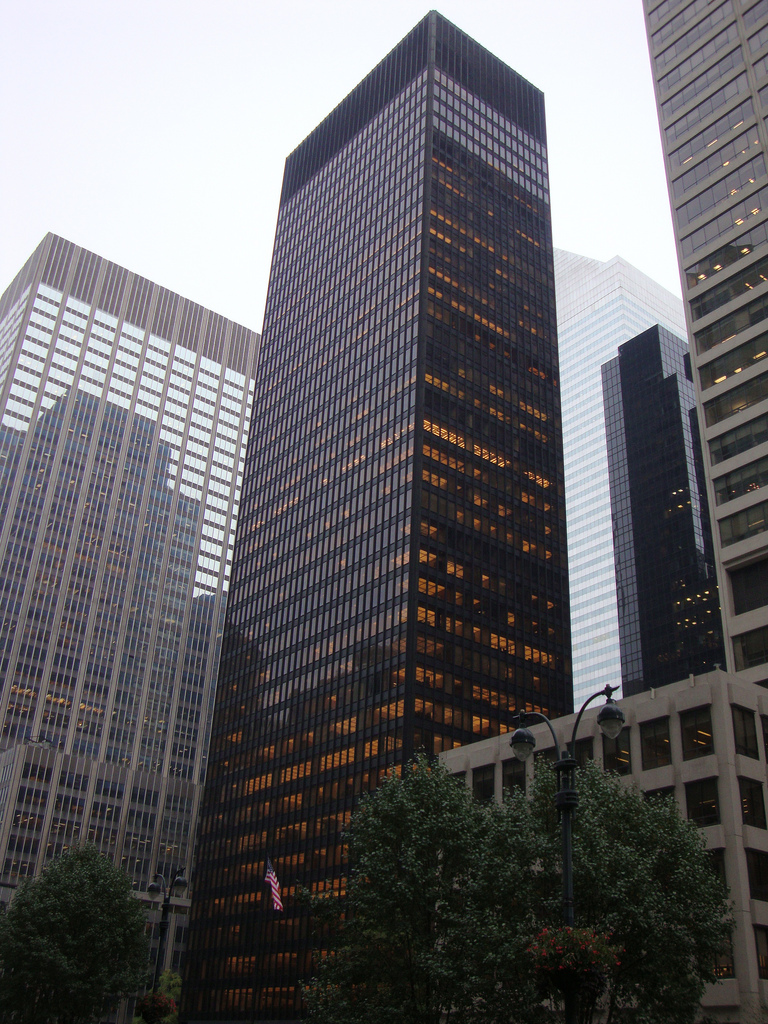
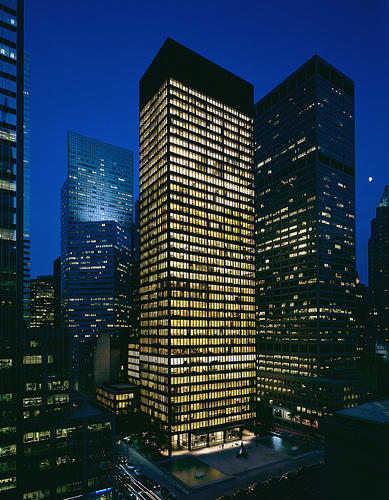
The Gloves are Off (Seagram Building Pt. 2)


Reuters drops some nuggets of gold in this article but for the sake of brevity, and my 9am deadline, I'm going to paste the relevant pieces.  This is in regards to last week's post on CGCMT 2013-375P.

The Pricing
  1. While this type of rating agency sniping has been going on over the past two years...it has never been timed in this way, according to industry participants.
  2. "The underwriters clearly emptied the old bag of tricks on this one, as far as crisis-era underwriting goes, and the agencies [fell for] them," said the head of CMBS investing at one of the biggest asset managers in the country.
    1.  Those tricks included re-measuring the building, lowering management fees in order to minimize projected expenses, and creating an 'optimizing' structure that pushes as much away from the mezzanine debt into the securitization at the Triple B minus level.
  3. ...the Triple A portion of the US$572.9m transaction was increased at pricing on Thursday from US$75m to US$209m. Spreads on the most subordinate pieces widened considerably, however. The deal was originally US$439.75m. 


The Structure
  1. The underwriters securitized the entirety of the so-called subordinate, or junior, portion of a US$782.75m commercial mortgage on the Seagram building.
    1. However, they only securitized part of the senior portion, known as the A loan, leaving the flexibility to increase the Triple A piece in the bond transaction.  
    2. he remaining unsecuritized portion of the A loan will be put into an upcoming multi-borrower CMBS conduit.
But let's get real people, this isn't the first pro-forma deal within the CMBS 3.0 space and it's not like Kroll and Moody's took the underwriter's assumptions at face value:

The Assumptions
  1. ...they generally thought that the issuer's initial projected numbers regarding net operating income, occupancy, expenses, structure, and other metrics on the top-notch building were way too aggressive.
    1. Therefore, each agency assumed a steep haircut on the building's net cashflow and valuation in order to arrive at its Triple A enhancement levels.
      1. Kroll assumed 17.9% less than the issuer's net cashflow and 46.7% below the appraiser's valuation...
      2.   Moody's undercut by 10.7% the underwritten cashflow.
The Other Elephants in the Room
  1. In January, Fitch rated a CMBS titled GSMS 2013-KYO, linked to six hotels in Honolulu, which was said to have used pro forma underwriting; 
    1. In response, the head of CMBS at Fitch, Huxley Somerville, said that Fitch used a highly stressed cashflow assumption on the deal backed by the Kyo-Ya hotel portfolio
    2. The underwriter, Goldman Sachs, used pro forma assumptions to calculate so-called Revenue Per Available Room (RevPAR), presenting a projected cashflow of US$174.4m. 
  2. ..last November Fitch gave Triple A grades to a deal linked to an office building, 1290 Ave of the Americas, with pro forma projections.
    1.  Similarly, on the deal backed by a loan on 1290 Ave. of the Americas in Manhattan, Somerville said there was a US$10m leasing reserve to cover future leasing costs
    2. the underwriter's cashflow was US$94.4m, while Fitch assumed US$89.9m.
  I'm still on the fence on this one.  If these kind of deals markedly increase over the next 6 months and CMBS teams at the dealers start making frequent weeknight appearances at Milk and Honey;
then I'll start to get worried. 


~Jingle Male
 

Monday, May 13, 2013

Nerd Fight!


Fitch does not seem to agree with Kroll's rating of a $782.75M, interest-only mortgage that was stuffed into the recent CGCMT 2013-375P deal.  For the uninitiated, Fitch seems to believe that the underwriting assumptions used to finance RFR Realty's acquisition of the Seagram Building is a bit aspirational, to say the least.

Basically:

"--2010: $53,560,729 (average occupancy of 96.9%);
--2011: $56,745,150 (average occupancy of 96.6%);

--2012: $54,078,388 (average occupancy of 94.4%).

This compares to the issuer's NOI of approximately $74 million and average occupancy assumption of 96.7%."

Citi and Deutsche  underwrote this one with about $20M in pro-forma income.  That is, the banks assumed that the property's earnings would increase ~37% via the following:

"--$10.2 million from the mark to market of rents assuming $135 psf for floors 2-12, $145 psf for floors 13-38 and $125 psf for the retail space;
--$7.8 million from the lease up of vacant space from 90.2% to 96.7%; and

--$2.2 million from a recent re-measurement of the building increasing the total sf to 858,000 sf."

I'm in the middle on this one.  On one hand I'd like to believe that Fitch has a point and is acting prudently but on the other hand, it seems as if they're still trying to make amends for missing some of the market tops that occurred in 2006 and 2007.  Not sure if Fitch is being proactive or reactive.


And then there was this (emphasis added):
Fitch provided preliminary feedback of $510 million at investment grade and was not asked to rate the transaction. 

But despite any butt-hurtness on the part of Fitch, I take a look at KBRA's assumptions and also the mezz jammed into this deal and it does make a Jingle Male wonder:


Right-click and select "View Image"
 So yes, let's see how this one plays out. 


~Jingle Male

Thursday, September 17, 2009

Sunny Day Real Estate - ProForma Underwriting

Sunny Day Real Estate was the original emo band of the '90s - The cover art is of the "Bronze Angel" in Vancouver, which I've always suspected was actually a Valkyrie, rather than an Angel, which scoop up the deserving and bravest heroes off the battlefield.

Proforma loans were less pervasive than the media would have you believe, but they are going to cause significant pain in the CMBS universe. There were about a dozen deals where more than a quarter of the loans were underwritten with some form of proforma underwriting. This came in two primary flavors:


  • Cash flow proformas - Property lease rolls indicated that new lease rates would be significantly higher. This was common in NYC Office where old $30 psf leases rolling over the next few years were underwritten using $100+ psf leases - most of these are more likely to be in the $60-70 psf area assuming things don't get much worse than they already are. Also common in NYC Multifamily where the landlords devised the strategy of kicking out rent control tenants and replacing them with market payers. The loans typically required a significant debt service reserve account to be set up in advance to cover the planned shortfalls in mortgage debt service - a lot of these accounts will dry up in the next 12 months (a few have already: Meyberry, Riverton, etc.; but bigger ones are coming: PCV/ST, 666 5th Ave, etc.)
  • LTV proformas - These were typical of loans that were, say, partially completed and leased out with a portion of the collateral under construction. No names jump to mind, but you can easily envision the Phase I shopping center that is leased with a Phase II under construction that is underwritten to a higher LTV. You can also picture the office tower with unsold condos and penthouses as collateral.
Trepp has identified about $38 billion of proforma loans (less than 5% of the market), but that doesn't seem to quite capture the issue. They looked at all conduit deals issued since 2005, and also included a few older deals and some non-conduit deals. The methodology was not disclosed to my knowledge.

Using data from Trepp and Intex, I backed into a number for cash flow proformas that is closer to 8% of the loans issued during 2006 & 2007. The dozen deals that Trepp identified as having more than a quarter of their collateral being proforma matched up with my results. It deserves some more attention, and I'll come back to the subject and post methodology and results at some point in the near future.